Monday, 23 May 2011
Coed y Garth
A blustery Saturday morning was spent navigating around the ‘Triangle Walk’ that takes in Garth Wood and the adjoining farmland.
There was surprisingly little chorus - perhaps because most birds are busy trying to find food for their insatiable young.
Tit song was the most conspicuous by its absence, with a few species of warbler, a Song Thrush and the ubiquitous Wren making up the orchestra.
I was eager to see if the Pied Flycatchers had remained faithful to a particular tree that has been occupied the previous two years, but sadly there was no sign.
Similarly absent from an open area of mature oak was the ‘spinning coin’ trill of a Wood Warbler - an area that has held held this species in the past.
Ironically it was when I exited the woodland that things improved and I heard the unmistakable-scratchy-mess-of-an–excuse that passes for the song of the Common Redstart. A scan of through the canopy revealed a female too.
The lane that oozes through the pastures between the two sections of tree was also productive producing three Yellowhammers.
This Bunting is widely considered to be uncommon this side of the border, but the more I walk locally the more singing males I discover. I would class them ‘local’ rather than uncommon.
Incidentally, the hedgerows along this section of road are superb being an almost classic mix of native plants, trees and shrubs. The verges are also left uncut, unlike at Lloc where I live.
Here, Flintshire County Council and its department of Yellow-jacketed Terminators fanatically strim the vegetation to within an inch of its life.
Is there are more pointless, costly (financial and ecological) exercise that councils undertake? I thought they were short of money?
Contrast Dyserth Road with the embankment along the A55 at the moment – it’s awash with a glorious array of wildflowers. Wonderful.
Until later.
Friday, 20 May 2011
Strictly come Skydancing
Naff-all at Connah’s Quay this morning, unless you have a penchant for loafing Shelducks and Mallard. I don’t
Just as well really as I enjoyed an excellent trip to Mynydd Hiraethog yesterday and there is plenty to tell!
A skydancing male Hen Harrier was unquestionably the highlight giving a spectacular aerobatic display – surely the ultimate wildlife experience of the Welsh Uplands, especially with the almost surreal sound of a singing Sedge Warbler in the background!
Other raptors sharing the airspace included a Kestrel, tons of Buzzards and also a single and rather ragged looking Red Kite. Many Ravens were lumbering around too – no doubt looking for the next upland sheep to bite the dust.
The north shore of Llyn Brenig was productive too and held the unexpected bird of the day in the form of a Hobby. I found the bird when scanning for a distantly calling Cuckoo – one of two yesterday – perched on top of a dead and exposed tree.
Although distant, the bird could be observed clearly through the scope making frequent feeding sorties, although to be honest I was not sure what it could gave been feeding on? Broad-bodied Chasers?
Almost as intriguing as the falcon was the appearance of three Dunlin feeding on the edge of one the small islands. I suppose the birds could be on passage, but more likely they are local breeders. If so this would be excellent news, especially given the paucity of nesting wading birds on the Denbigh Moors.
Mynydd Hiraethog 20.05.11
1 Hen Harrier (male)
1 Red Kite
1 Hobby
2 Cuckoo
3 Dunlin
1 Sedge Warbler
Until later.
Just as well really as I enjoyed an excellent trip to Mynydd Hiraethog yesterday and there is plenty to tell!
A skydancing male Hen Harrier was unquestionably the highlight giving a spectacular aerobatic display – surely the ultimate wildlife experience of the Welsh Uplands, especially with the almost surreal sound of a singing Sedge Warbler in the background!
Other raptors sharing the airspace included a Kestrel, tons of Buzzards and also a single and rather ragged looking Red Kite. Many Ravens were lumbering around too – no doubt looking for the next upland sheep to bite the dust.
The north shore of Llyn Brenig was productive too and held the unexpected bird of the day in the form of a Hobby. I found the bird when scanning for a distantly calling Cuckoo – one of two yesterday – perched on top of a dead and exposed tree.
Although distant, the bird could be observed clearly through the scope making frequent feeding sorties, although to be honest I was not sure what it could gave been feeding on? Broad-bodied Chasers?
Almost as intriguing as the falcon was the appearance of three Dunlin feeding on the edge of one the small islands. I suppose the birds could be on passage, but more likely they are local breeders. If so this would be excellent news, especially given the paucity of nesting wading birds on the Denbigh Moors.
Mynydd Hiraethog 20.05.11
1 Hen Harrier (male)
1 Red Kite
1 Hobby
2 Cuckoo
3 Dunlin
1 Sedge Warbler
Until later.
Sunday, 15 May 2011
Sitting on the dock of the bay...
For the umpteenth time I rocked up at Connah’s Quay NR only to realise I had forgotten my key – not a clever idea with rain forecast.
Plan B was duly enacted and I tootled over to Shotton Pools NR.
Disappointingly – but not surprisingly – the tern rafts were emptier than the brain of the average Eurovision contestant. Sadly it looks like three strikes and out for the Common Terns.
Although the timing could never have been good, it is ironic that birds have deserted the colony just as Tata – with the help of a grant from CCW – have spent money developing (some would say damaging) the site with view to showing the birds to schoolchildren.
Result: Shotton Pools has a brand new hide and no birds; the Point of Ayr has birds, but no hide!
With little activity around the pools I had a walk along the riverbank. It was pretty quiet here too, with a single female Wheatear and a male Stonechat the only visible birds of note, although there was plenty of audible activity as various Reed and Sedge Warblers engaged in their own song contest.
The final hour before lunch was spent at Cop Hole and it was one of the most enjoyable hours birding I have had in a long time.
No rarities, but the incredible sight of the rain bringing down large numbers of Swifts, House Martins, Sand Martins and Swallows – a mesmerising spectacle.
Until later.
Plan B was duly enacted and I tootled over to Shotton Pools NR.
Disappointingly – but not surprisingly – the tern rafts were emptier than the brain of the average Eurovision contestant. Sadly it looks like three strikes and out for the Common Terns.
Although the timing could never have been good, it is ironic that birds have deserted the colony just as Tata – with the help of a grant from CCW – have spent money developing (some would say damaging) the site with view to showing the birds to schoolchildren.
Result: Shotton Pools has a brand new hide and no birds; the Point of Ayr has birds, but no hide!
With little activity around the pools I had a walk along the riverbank. It was pretty quiet here too, with a single female Wheatear and a male Stonechat the only visible birds of note, although there was plenty of audible activity as various Reed and Sedge Warblers engaged in their own song contest.
The final hour before lunch was spent at Cop Hole and it was one of the most enjoyable hours birding I have had in a long time.
No rarities, but the incredible sight of the rain bringing down large numbers of Swifts, House Martins, Sand Martins and Swallows – a mesmerising spectacle.
Until later.
Saturday, 14 May 2011
Spring Skua
A cracking Bonxie flying out of the estuary early this morning was reward alone for the early start and ample compensation for getting my gear clogged with sand.
Mind you, my scope would have been spared had I not decided to try a new seawatching spot from a higher dune further along the beach – a plan that lasted all of ten minutes before I retreated to my usual location just to the east of the lighthouse.
Great Skua aside there were plenty of other birds in Liverpool Bay, the most numerous being Gannets.
A few Sandwich and Commic Terns battled against the moderate westerly, but it was a score or so Little Terns that entertained the most as they attempted to feed near the buoys.
The first Manxies of the year appeared too. Only three, and a good way out too – as was the solitary Kittiwake I also picked out this morning.
More run-the-mill stuff included a Great Crested Grebe and a number of small flocks of Common Scoter zooming around on the horizon.
At about nine thirty things started to fizzle out and the appearance of Mark Murphy seemed to put a hex on things entirely by ten! He did manage to magic a Sparrowhawk out of thin air however…spooky.
Point of Ayr 14.5.11 (Seawatch)
Bonxie 1
Manxie 3
200+ Gannet
Little Tern 20+
Sandwich Tern 3
Commic Tern 15+
Common Scoter 50+
GC Grebe 1
Guillemot 1
Kittiwake 1
Sparrowhawk 1
Until later
Monday, 2 May 2011
Ozzy Airbourne!
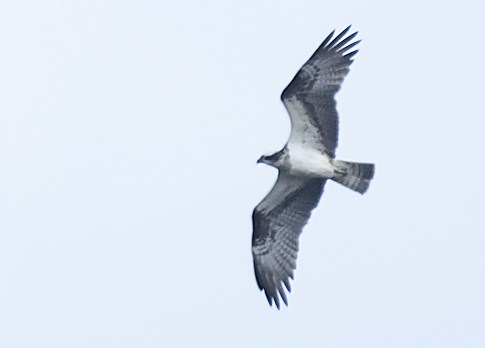
The value of persistence has to be the theme of today. Whilst not quite on the level of locating, capturing and killing an international terrorist, I eventually succeeded in bagging my first Flintshire Osprey.
When a regular down at IMF, I had an uncanny ability to pick flyover Ospreys with a record of three in two years, but crossing the River Dee it was – until today – a different story.
After three stunning hours at the Point of Ayr I had bumper number of migrants under my belt including sixteen Whinchats, five Yellow Wagtails and six Whimbrels, but I still needed a star turn to top off the morning’s birding.
And then it appeared – an Osprey flying low over the spit.
Cue total gull pandemonium, although strangely it was a quartet of Shelducks that escorted the raptor into Liverpool Bay.
Plenty of other bits and bobs this morning, including at least forty Common Whitethroat – no self respecting hawthorn bush was to be seen without one.
Lots of Swallows moving through too, with many struggling against the strong easterly wind. A handful of Swifts zoomed over the dunes too at first light, but it was a peppering of House and Sand Martins thereafter that broke up the steady stream of Swallows.
Wader interest was limited to a sextet of Whimbrels and a couple of Common Sandpipers on the old colliery lagoons.
Quite a morning really and yet more evidence of how good the Point of Ayr can be for migrants. It’s a shame that it doesn’t get the coverage that the North Wirral Coast or the ‘a la mode’ Great Orme gets – more often than not, I’m the only birder there…
Point of Ayr/Talacre Dunes 02.05.11
1 Osprey
16 Whinchat
5 Yellow Wagtail
2 Tree Pipit
45+ Common Whitethroat
6 Swift
5 House Martin
10+ Sand Martin
150+ Swallow
6 Whimbrel
2 Common Sandpiper
1 Sparrowhawk
1 Kestrel
Until later.
When a regular down at IMF, I had an uncanny ability to pick flyover Ospreys with a record of three in two years, but crossing the River Dee it was – until today – a different story.
After three stunning hours at the Point of Ayr I had bumper number of migrants under my belt including sixteen Whinchats, five Yellow Wagtails and six Whimbrels, but I still needed a star turn to top off the morning’s birding.
And then it appeared – an Osprey flying low over the spit.
Cue total gull pandemonium, although strangely it was a quartet of Shelducks that escorted the raptor into Liverpool Bay.
Plenty of other bits and bobs this morning, including at least forty Common Whitethroat – no self respecting hawthorn bush was to be seen without one.
Lots of Swallows moving through too, with many struggling against the strong easterly wind. A handful of Swifts zoomed over the dunes too at first light, but it was a peppering of House and Sand Martins thereafter that broke up the steady stream of Swallows.
Wader interest was limited to a sextet of Whimbrels and a couple of Common Sandpipers on the old colliery lagoons.
Quite a morning really and yet more evidence of how good the Point of Ayr can be for migrants. It’s a shame that it doesn’t get the coverage that the North Wirral Coast or the ‘a la mode’ Great Orme gets – more often than not, I’m the only birder there…
Point of Ayr/Talacre Dunes 02.05.11
1 Osprey
16 Whinchat
5 Yellow Wagtail
2 Tree Pipit
45+ Common Whitethroat
6 Swift
5 House Martin
10+ Sand Martin
150+ Swallow
6 Whimbrel
2 Common Sandpiper
1 Sparrowhawk
1 Kestrel
Until later.
Subscribe to:
Posts (Atom)